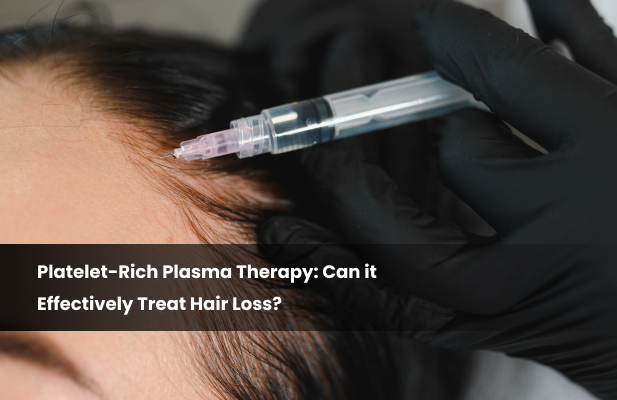
At SP Care Clinic we understand that hair loss affects not just your appearance but also your emotions, which may be extremely distressing. It’s possible that you’re searching for low-maintenance, safe, and effective treatments if you’ve been observing thinning spots or an expanding hairline. Here comes Platelet-Rich Plasma (PRP) hair treatment in Liverpool, a safe, natural alternative to surgery that is becoming more and more well-liked in Liverpool, partly because of reliable clinics like SP Care Clinic. Let’s simplify it in words that are easy to understand.
Basically, SP Care Clinic highlights that the platelet-rich plasma (PRP) therapy is injecting a small quantity of your own blood into your scalp after it has been centrifuged to concentrate your platelets. The concept? Growth factors included in these platelets can encourage thinned or inactive hair follicles to become active once more. Stronger, thicker hair as well as a better scalp environment may be the outcome of prp hair treatment in Liverpool.
This procedure is often finished in a single, brief outpatient visit; just show up, get the obstruction removed in 15 to 20 minutes, and leave with instant clarity.
This procedure is often finished in a single, brief outpatient visit; just show up, get the obstruction removed in 15 to 20 minutes, and leave with instant clarity.
For good reason, many Liverpool residents are selecting this option: it is non-surgical, requiring no incisions or sutures, and it requires little recovery time.
During PRP hair treatment in Liverpool, here’s people what to expect:
PRP may be a good option if you have early-stage thinning or pattern hair loss. Here are a few highlights:
People in the Liverpool area have come to trust SP Care Clinic for a number of reasons:
Absolutely, PRP hair treatment in Liverpool can be a natural and successful cure for people who suffer from hair loss, particularly if it is in its early to moderate stages. Expert clinics like SP Care Clinic for PRP hair treatment in Liverpool can safely and smoothly apply it, because it’s gentle and makes use of your natural healing abilities. The key is consistency over a few months, and the benefits of PRP hair treatment can be both observable and beneficial.
At SP Care Clinic, they say that within three to six months, many people report thicker hair and less shedding, especially if treatments are performed on time.
The majority of patients report just little discomfort during PRP hair treatment in Liverpool. During the treatment any redness, swelling, or pain usually goes away fast after the minimally invasive surgery.
A typical schedule consists of three to four initial sessions at SP Care Clinic’s PRP hair treatment in Liverpool separated by four to six weeks, followed by maintenance visits every four to six months.
As experts advise, the allergies are uncommon because PRP hair treatment uses your own blood. The most frequent adverse effects are modest and transient, such as injection site redness or discomfort.
When follicles are still present, it works best for people with early to moderate hair thinning. You might need to look at different choices if you have scarred parts of your scalp or advanced baldness.
Clinics like SP Care Clinic that have PRP hair treatment in Liverpool and other services and treatments with skilled staff, up-to-date technology, open consultations, and proof of positive outcomes.